Anthares OS ♥
Independent Linux distribution based on Debian 13 with customized Cinnamon. Minimalist, GUI-first, with an epic theme inspired by Antares/Scorpius and the Élise virtual assistant.
AntharesOS Beta 0.4 is out!!!
Download ISO
Why Anthares OS?
A complete ecosystem for users who want simplicity, privacy, and usability without a mandatory terminal. Built by a solo developer since 2018 with persistence and care.
Theme
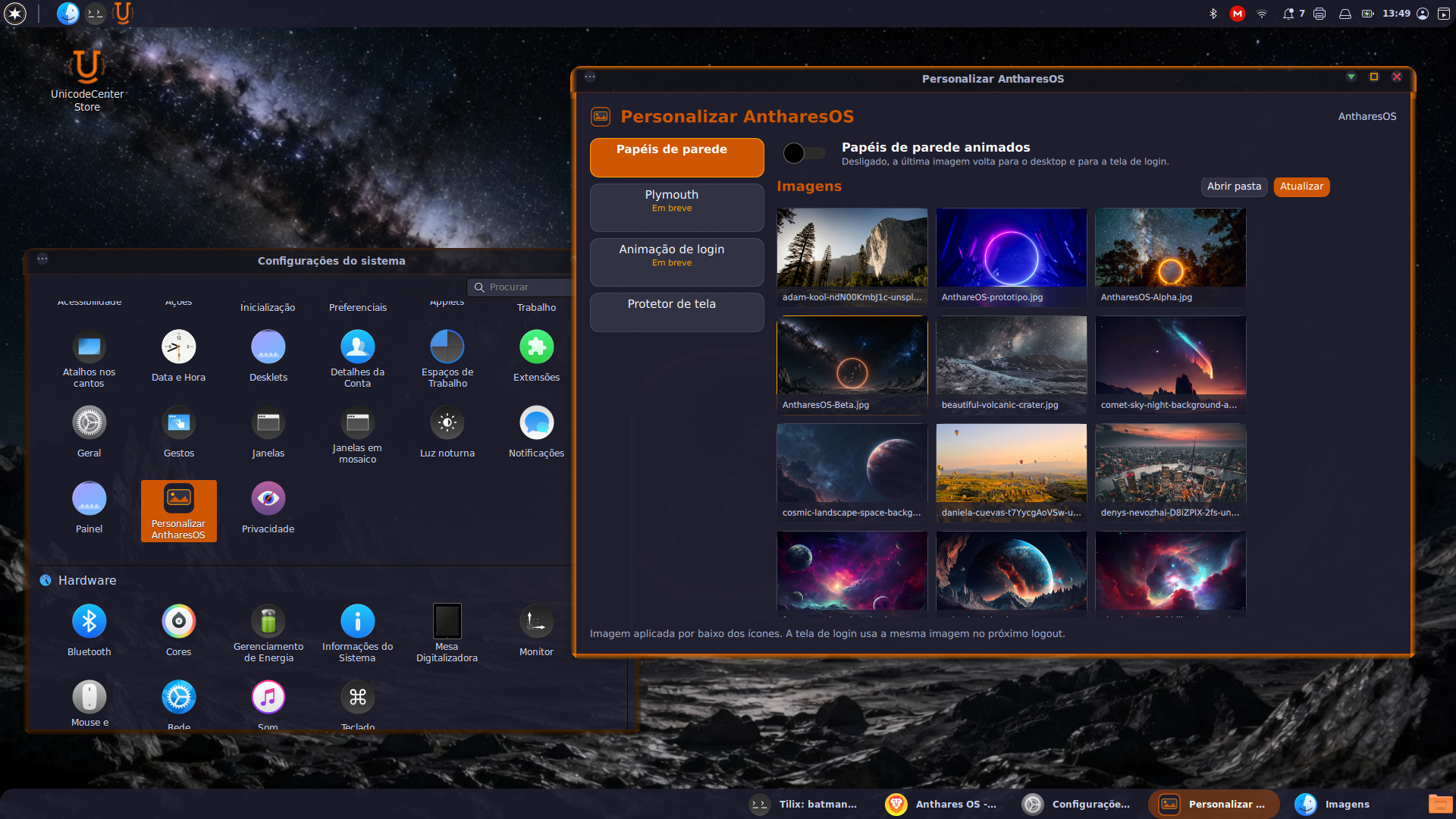
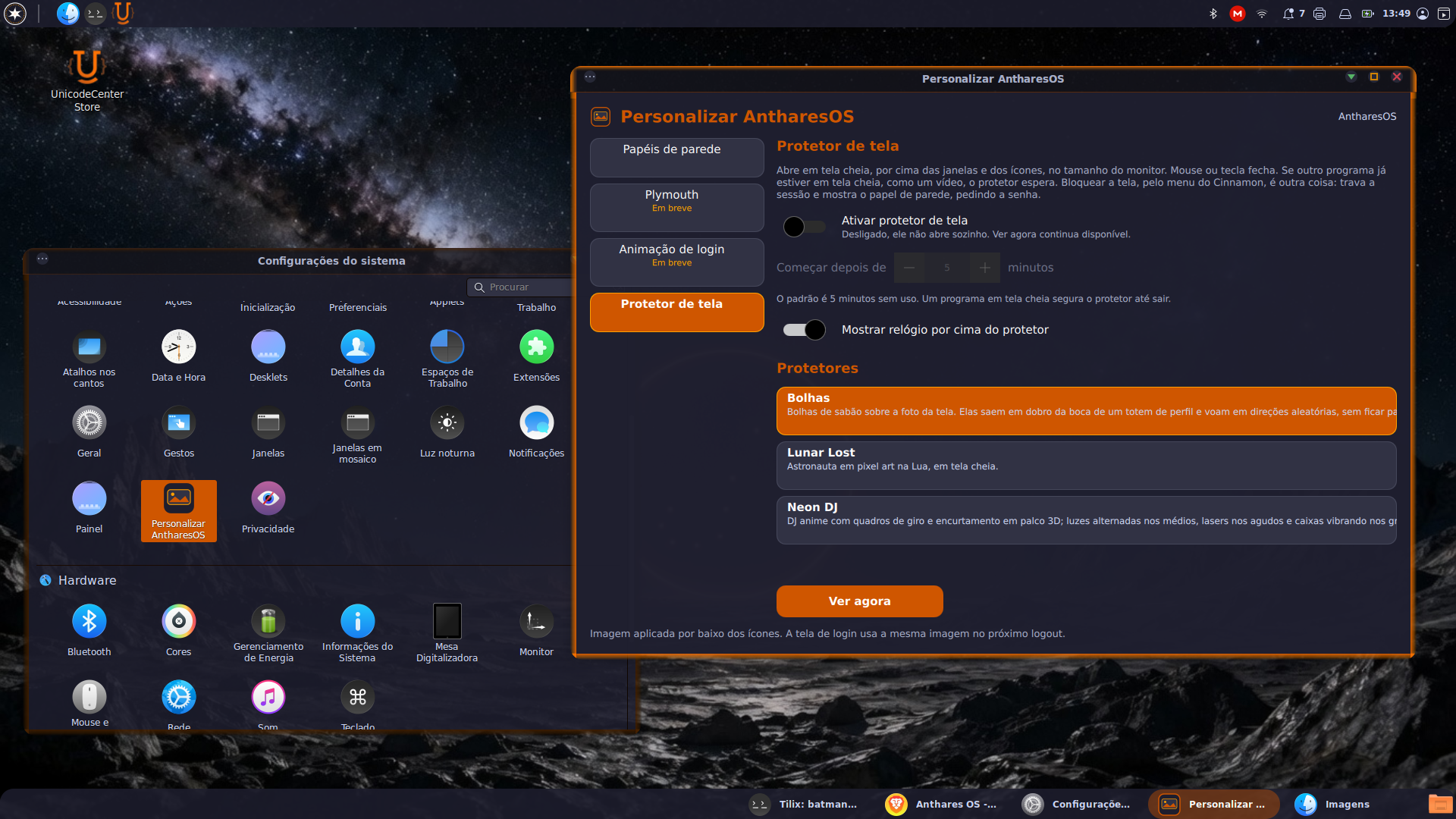
Dark interface with orange accents — minimal and modern. The desktop evokes a space setting: starry background, Milky Way atmosphere, and identity inspired by the Scorpius constellation and Antares.
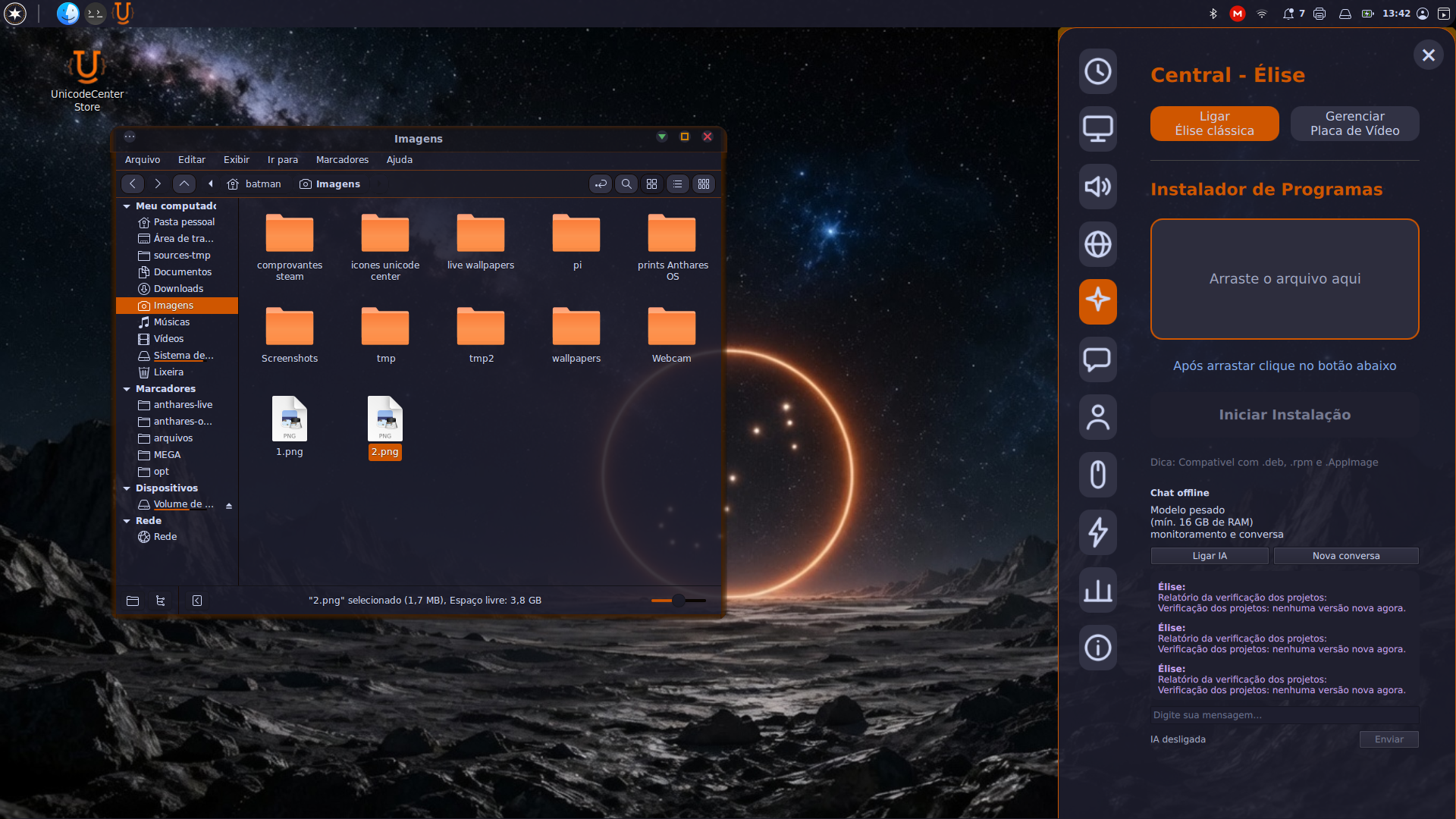
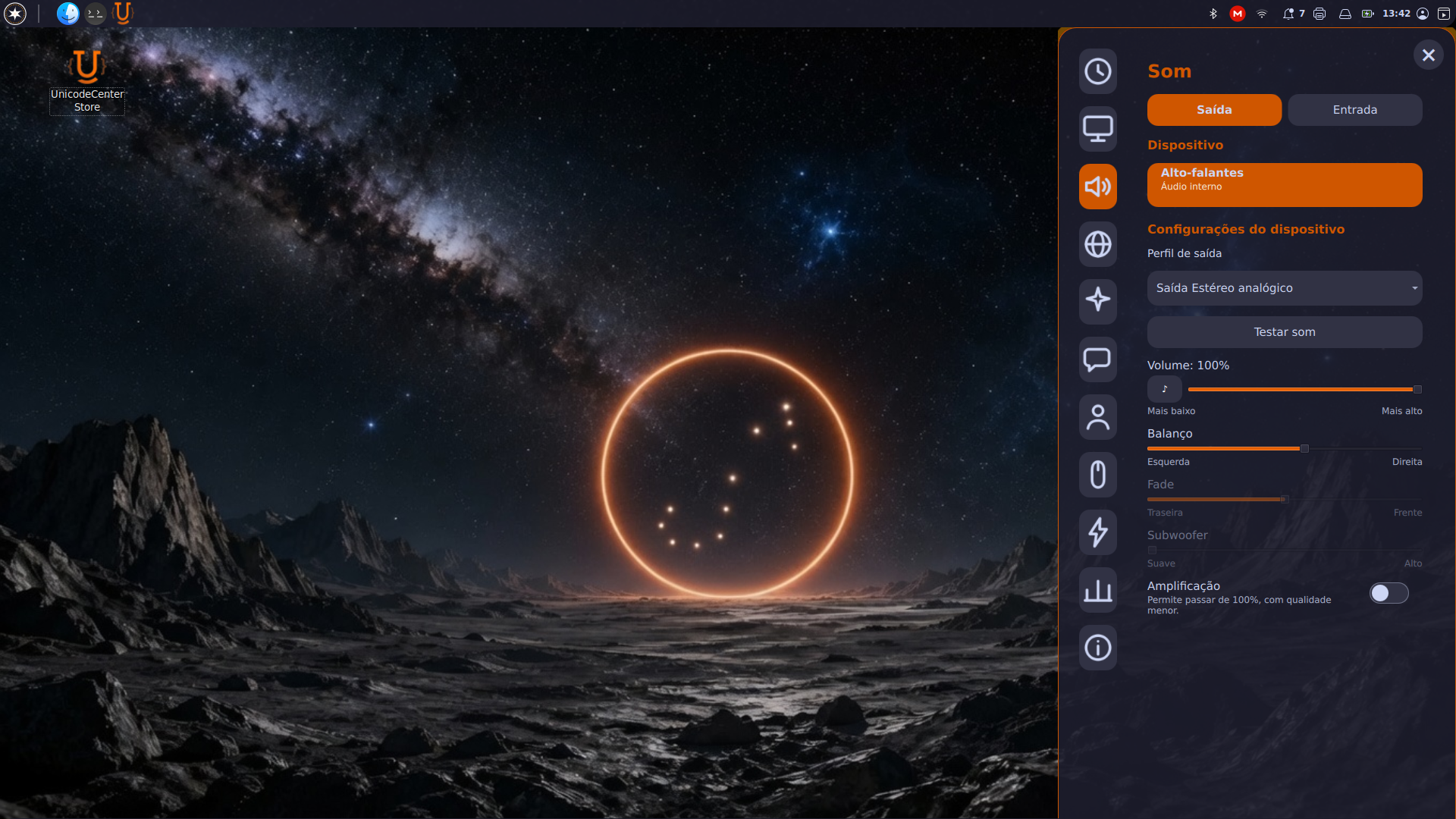
DeepSide Dock
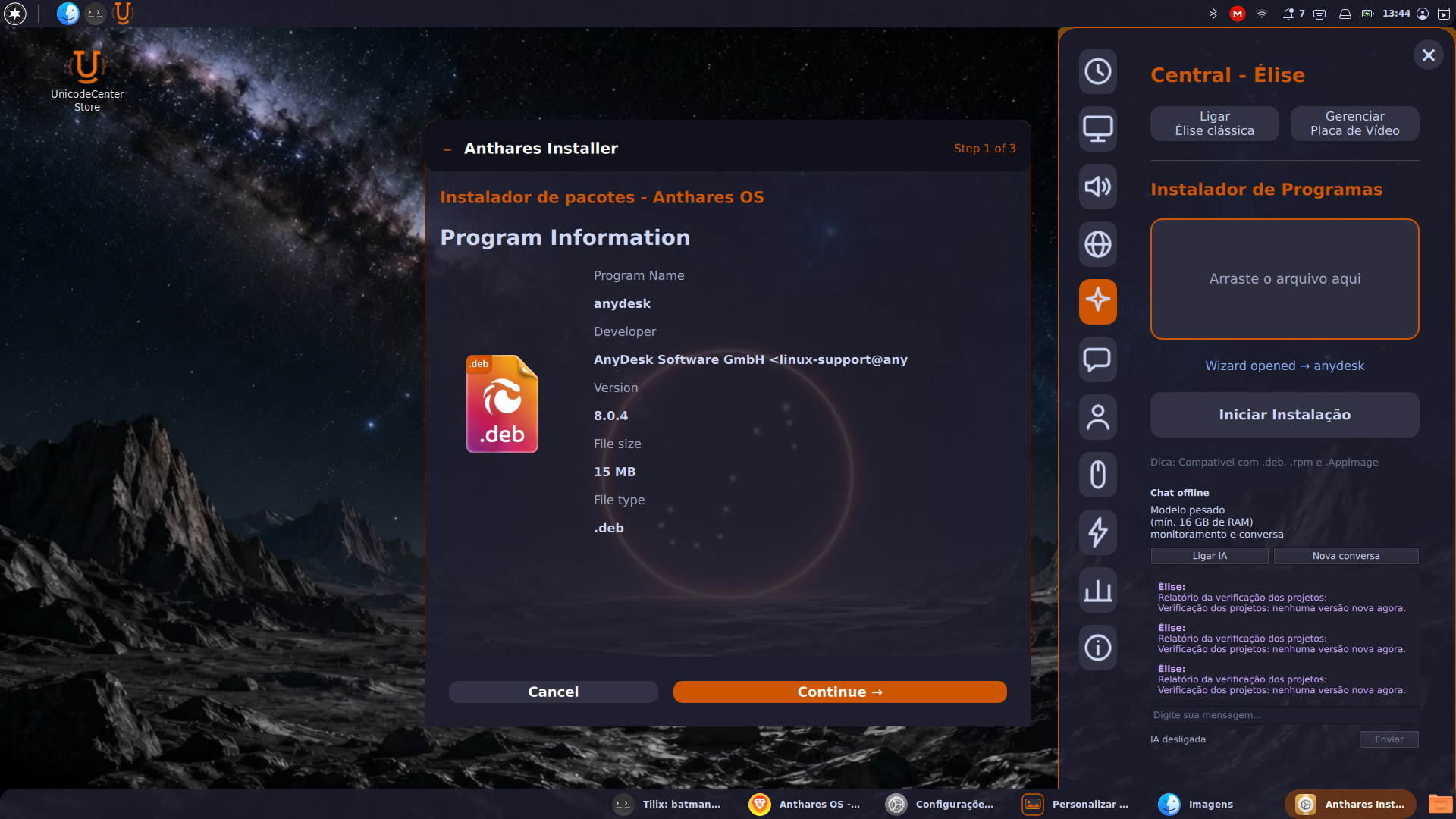
Side dock for display, sound, network, power, Telegram, and the Élise panel, including the GPU manager.
Élise Assistant
A classic version and a CPU AI version. Updates the system, organizes files, reviews the firewall, and watches the camera and microphone, with permission.
LaunchpadX
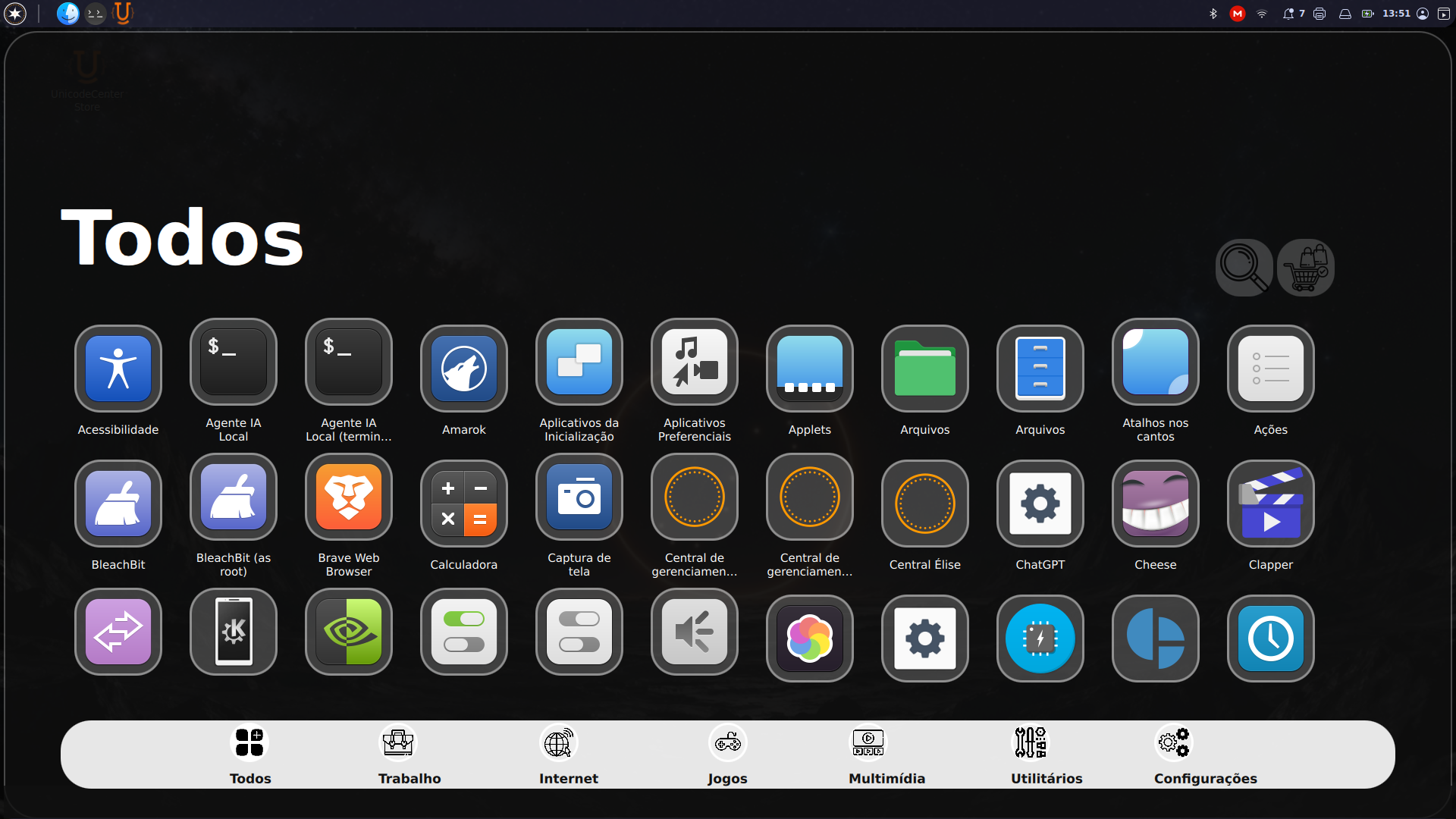
Application menu: installed programs in view, categories along the bottom, and search by name.
PI
Formerly called Ponto Inicial. On first boot it lets you choose apps, then removes itself.
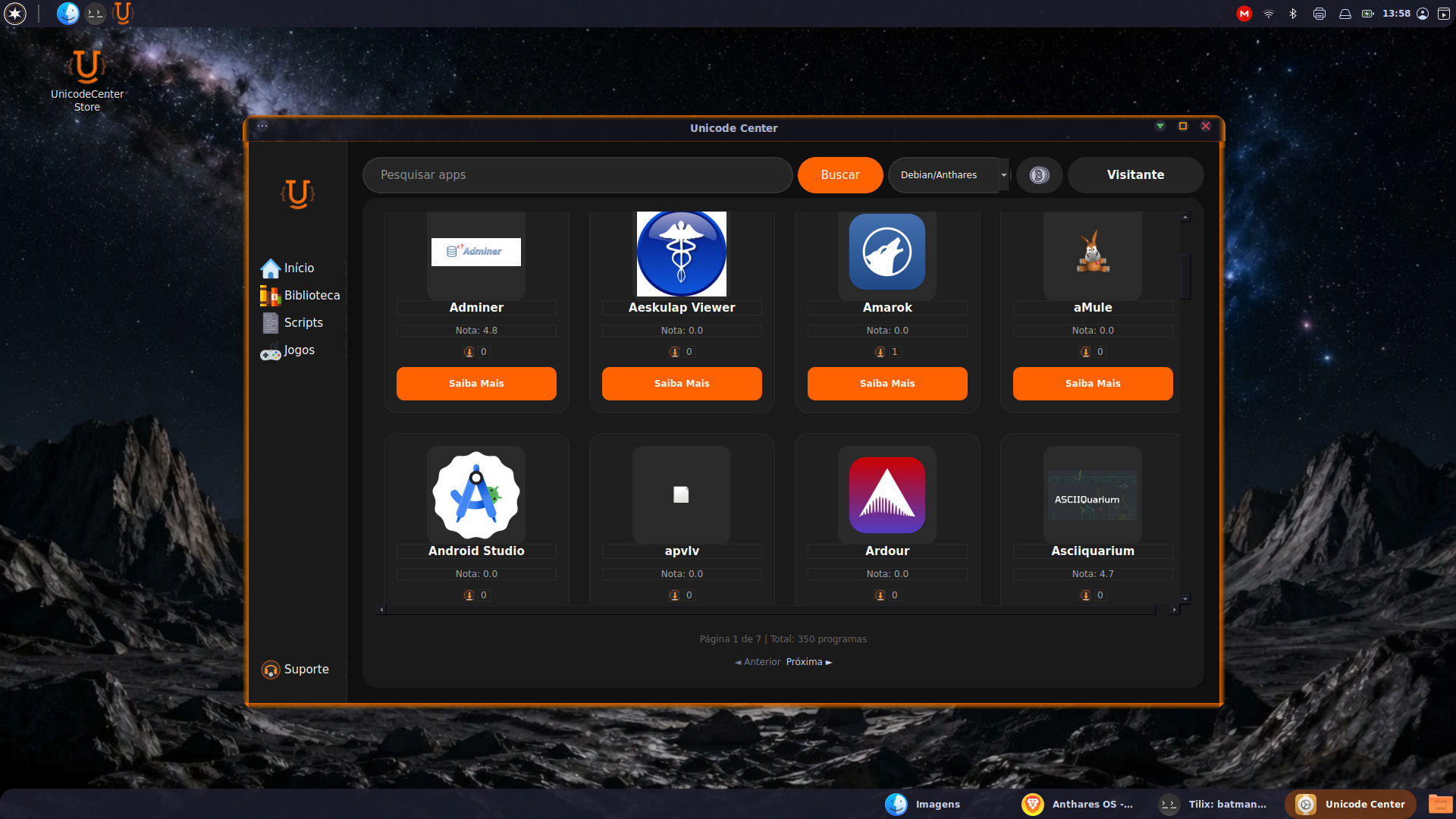
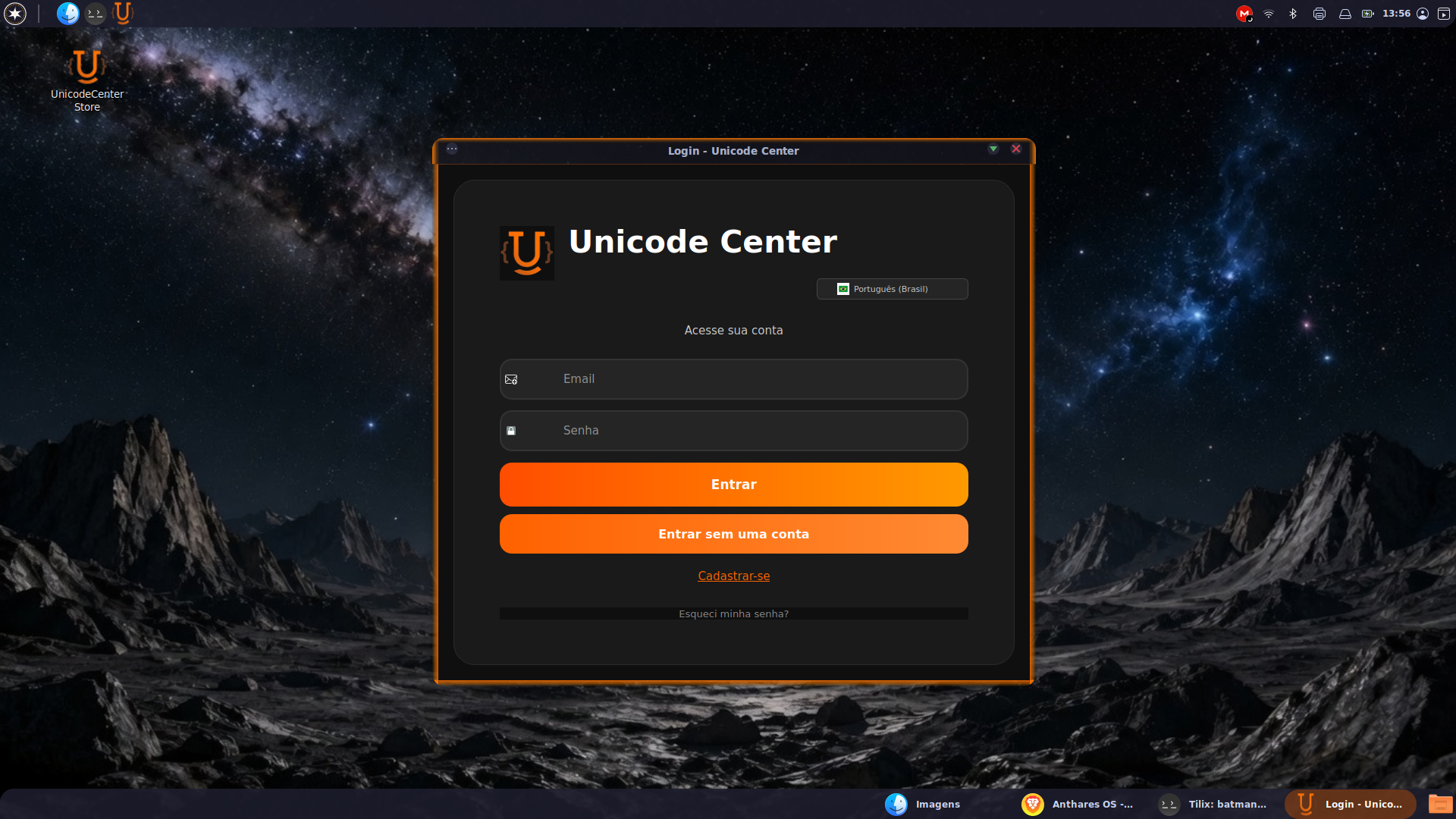
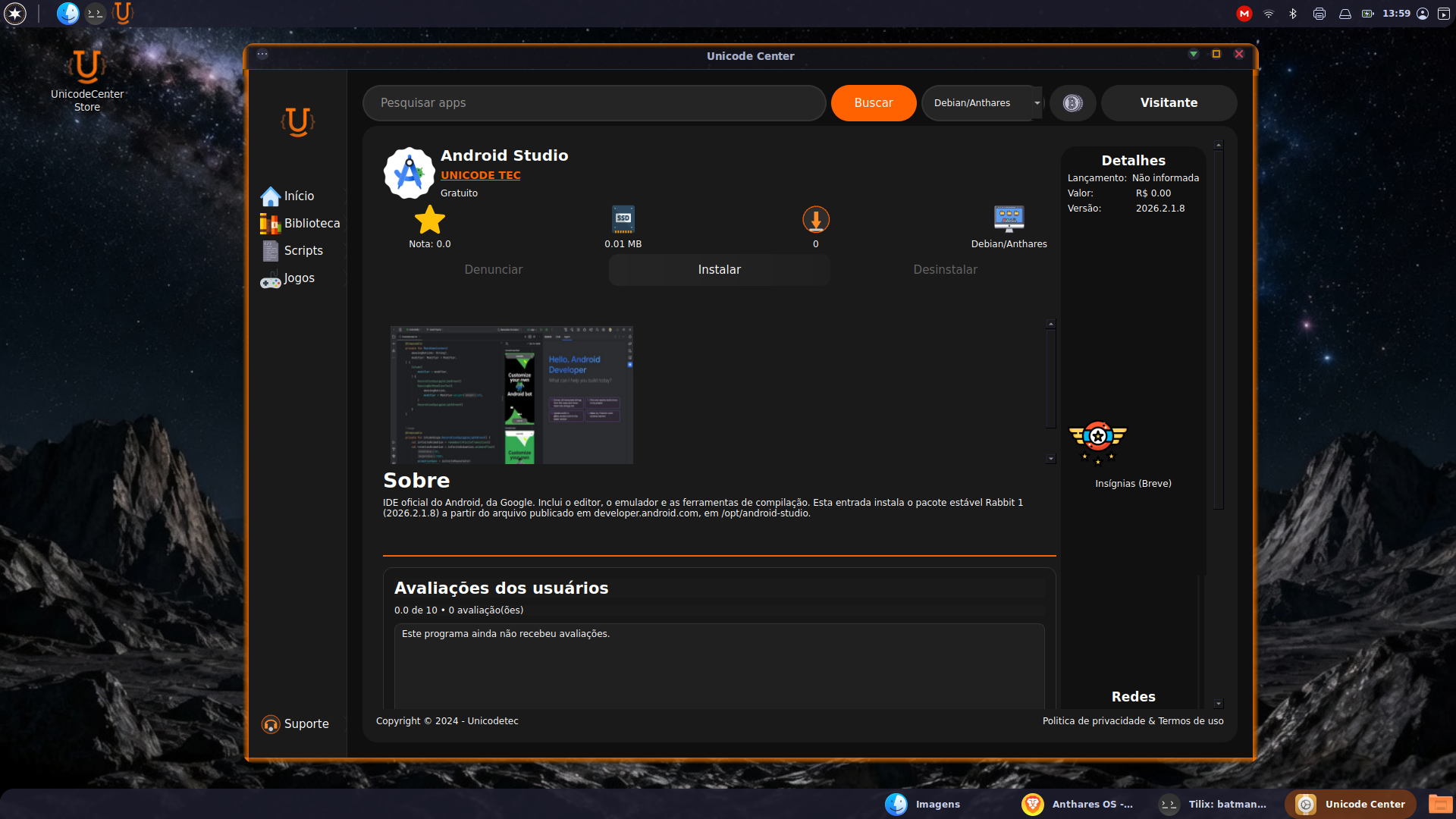
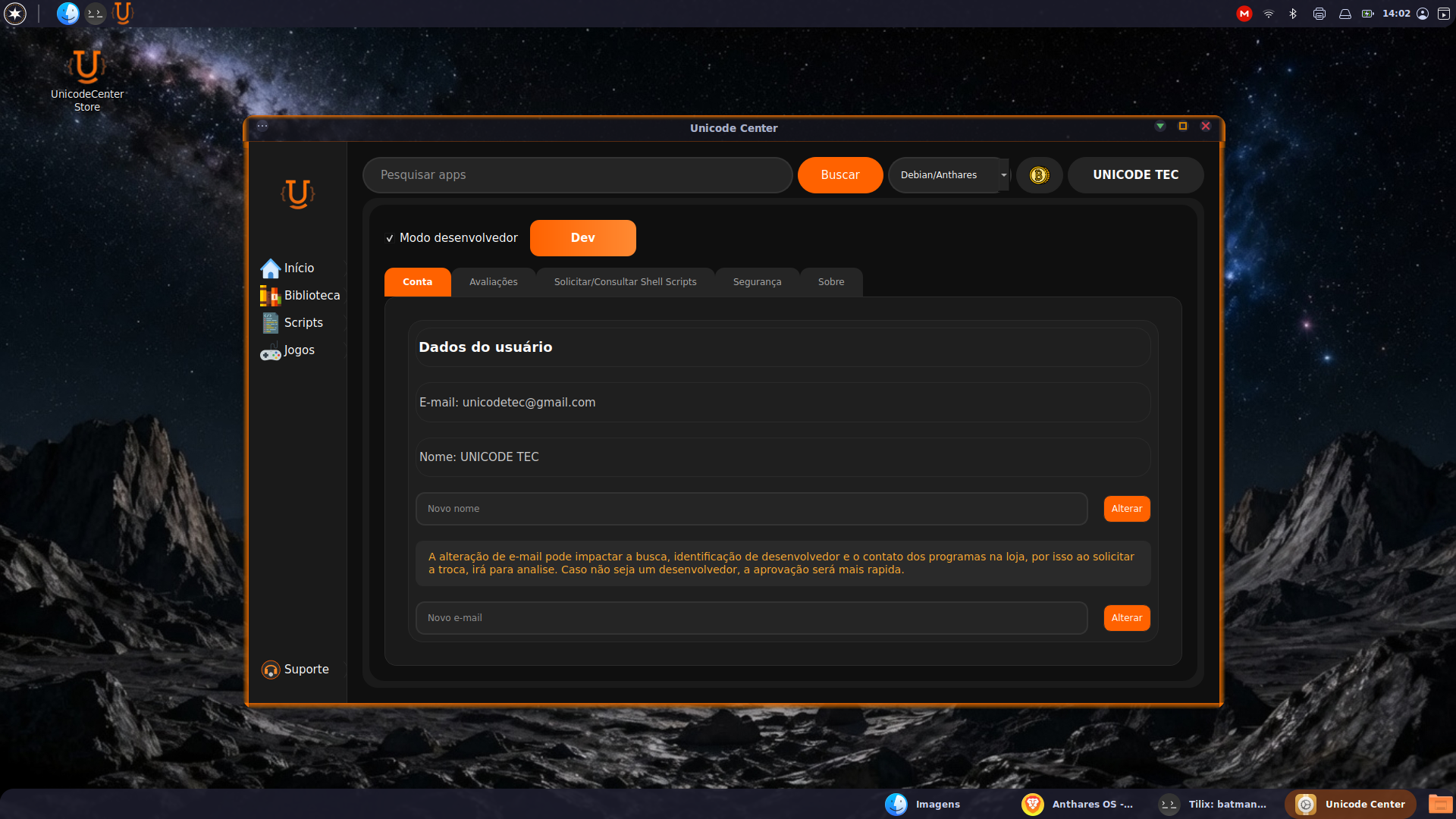
Unicode Center
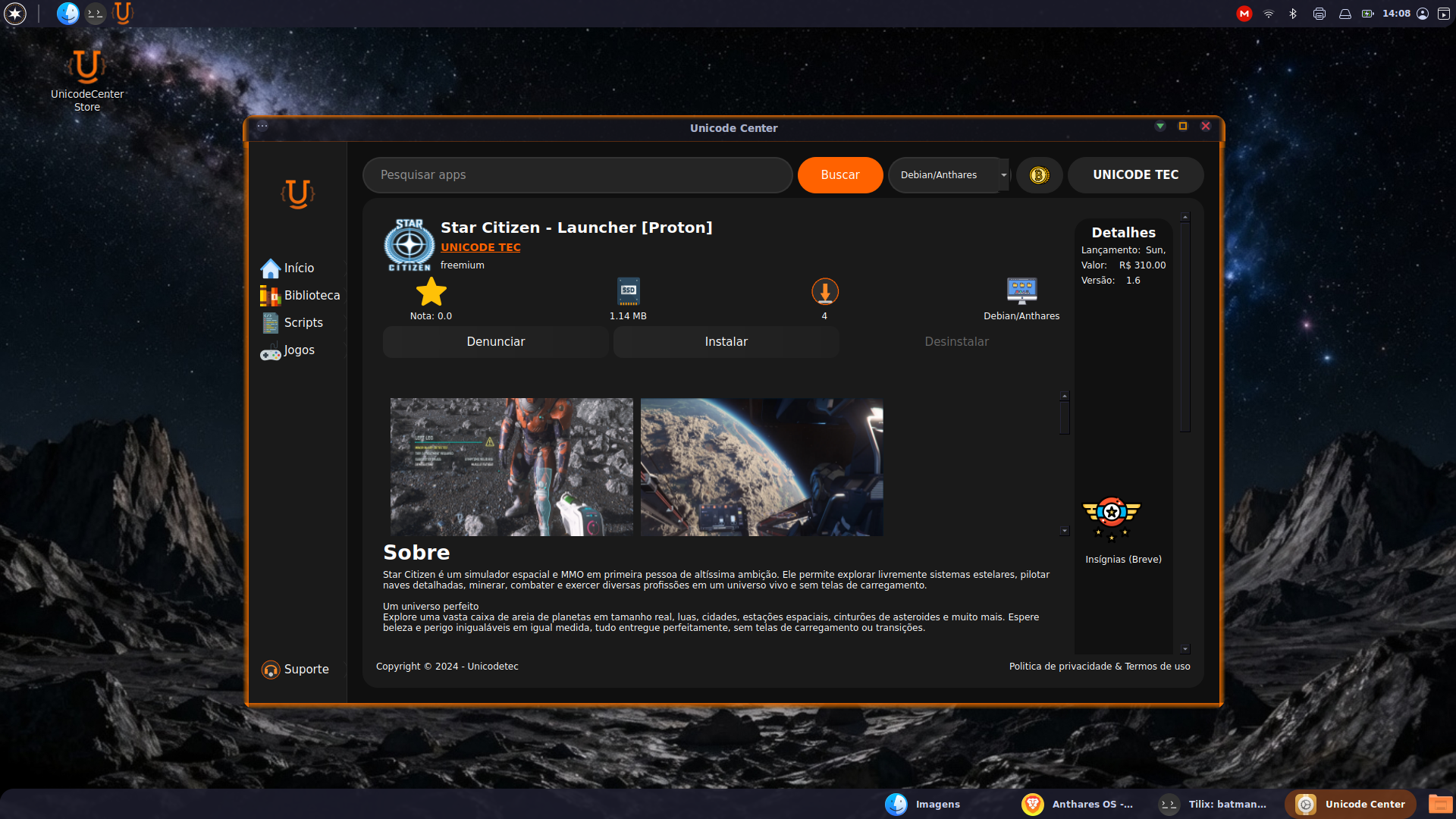
One-click app store. Without an account, only the Debian repositories. Free and open-source programs work today; 150+ apps are planned.
Explore the ecosystem of Anthares OS.
Community
Join, ask questions, and follow Anthares OS development.
Support the Project
Support the Anthares OS project. Below is a button so you can make a donation and help keep the project online. The amount is up to you: donate whatever you wish. The platform used is Stripe. None of your data, and none of your card details, are stored by Unicode Tech.
Make a donation in the USDT cryptocurrency to the project. Help us keep the project online, with the security and privacy of cryptocurrency. Copy the address below and send whatever amount you wish to this wallet.
USDT · Base and Arbitrum
0x57C242F2E7d3C4f34DEabef4ef2aFaBDb8C354d0
Frequently
asked questions
This is not a simple question to answer, because the project has many objectives and functionalities. The best starting point is the documentation on the site, where each part of the project has its own guide.
In an overview, the main element is the operating system itself. The available edition is based on Debian 13, with customized Cinnamon. An edition based on LFS (Linux From Scratch) and BLFS (Beyond Linux From Scratch) remains in planning and depends on funding and a team. The Debian edition continues to be maintained, including for people who prefer to stay in that ecosystem.
The current version is a Debian-derived distribution, in the same way that Linux Mint is an Ubuntu-derived distribution, but with its own characteristics, adjustments, and functionalities.
The project was conceived to reduce the need for the terminal in day-to-day tasks. The priority audience is people coming from Windows, especially gamers and casual users, without excluding people who already have Linux experience. Installing programs, everyday adjustments, and the fixes the ecosystem already covers are done through graphical interfaces. When a known function still depends only on the terminal, the direction of the project is to offer a graphical way to reach it. That describes the development priority, not the completion of every interface.
Unicode Center follows the idea of an app store: the people who build Anthares OS are not the only ones who define the catalog. Developers can request access to publish their programs. Without an account, anonymous access reaches the programs in the Debian repositories. With an account, free and open-source programs work today. Payments, the contracts for commercial modalities, and revenue sharing with other distributions are not operational yet.
The main differentiator is Élise, an assistant focused on administering the computer. Conversation is not the main purpose. She watches the system and calls the person when their participation is needed.
Élise is still at the beginning of the full vision. The current implementation corresponds to less than 5% of the planned functionalities. There are two versions: the classic one, made of scripts and rules, and the AI version, which runs on the CPU and does not require a graphics card. The classic version asks for at least 512 MB of RAM, with about 2 GB recommended. The AI version occupies about 4 GB, asks for at least 5 GB, and recommends 16 GB so other programs still have room.
As an illustration, Élise works as a computer technician integrated into the system, with the guidance to step in discreetly.
In the current version, she notifies and asks for the administrator password to update the system every two days. Every thirty minutes she checks whether there is a new version of Unicode Center, PI, Élise itself, DeepSide Dock, and LaunchpadX, and stays quiet when there is nothing to update. Every thirty days she asks whether she may review the firewall: if a firewall is already active, she does not change its rules. Every seven days she asks whether she may organize the top level of some personal folders. She also watches camera and microphone use and asks whether that program's access should always be allowed or stopped.
The AI version adds a check of known package, repository, and boot situations, in cycles of about three days. The test starts without a password. If there is an error, Élise explains it and only then asks for permission to fix it. She can also watch new local Bash terminals, with pause, and propose a repair only after permission. A small chat is for adjusting the assistant's own routines, not for generating programs.
Still part of the proposal, and not of what the current version runs on its own, are enabling or disabling kernel modules according to the hardware, automatically optimizing the computer when a game is detected, recovering on its own from a failure that prevents the graphical interface from loading, and continuously adapting the system's own base to each person's profile. Automatic monitors for RAM, temperature, disk, and swap are not running in this version.
The LFS edition remains in planning precisely because an own base would give Élise more control. It is not available. The Debian edition is the current version of Anthares OS.
Build with us
Open source under GPLv3. Issues and pull requests are welcome on GitLab. Contact: unicodetec@gmail.com